
Sacroiliac (SI) Joint Fusion for Pain Management
Sacroiliac (SI) Joint Fusion
Treatment Overview
Sacroiliac (SI) joint fusion is commonly used to treat SI joint pain and instability. This minimally invasive procedure aims to reduce inflammation, alleviate pain and support your return to everyday activities. Compared to open fusion surgeries, minimally invasive techniques generally offer fewer complications and a faster recovery.1,2
How the Procedure Works
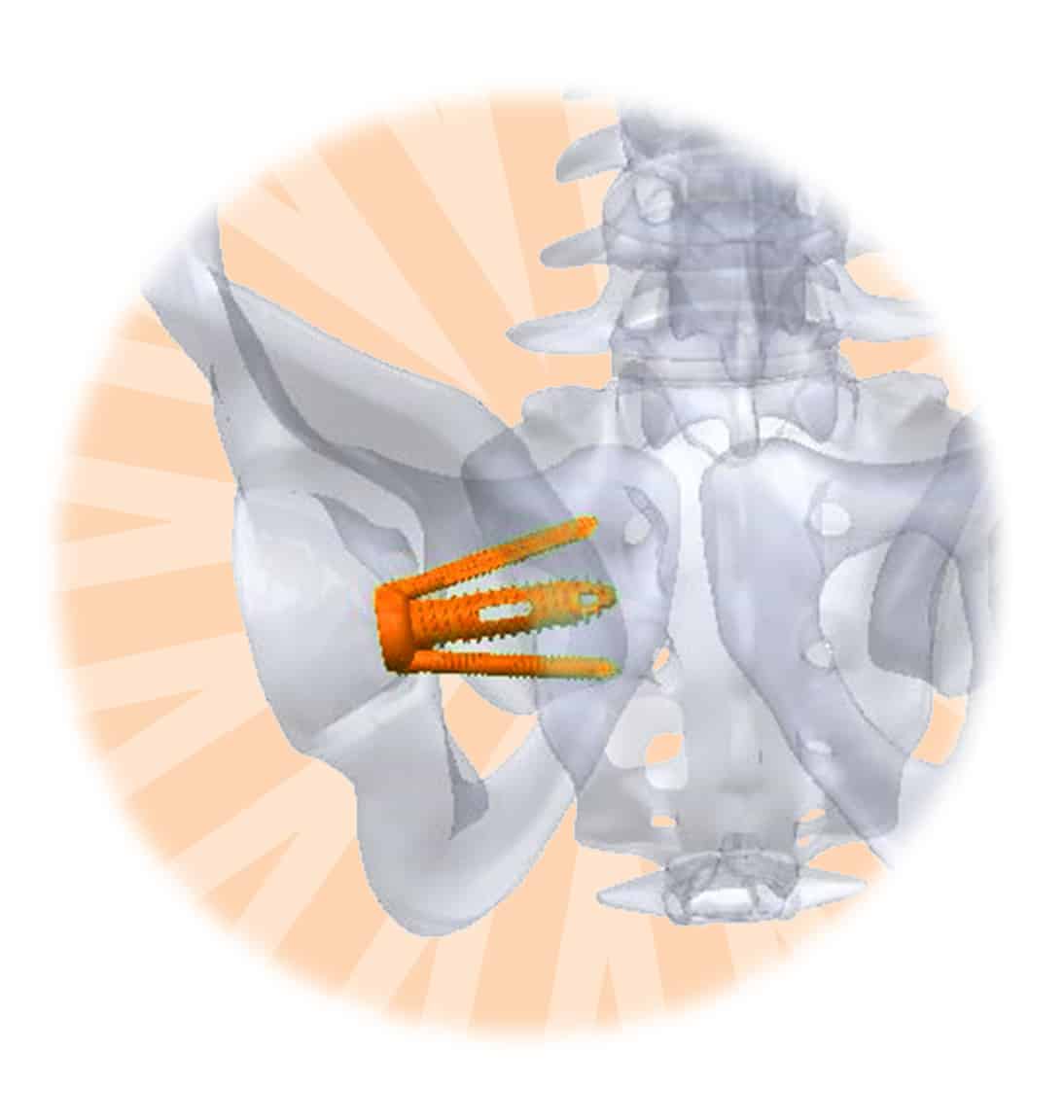
During the procedure, a small incision of less than two inches is made in the buttocks. Innovative devices are then implanted using image-guided technology to stabilize the sacroiliac joint and promote bone growth.
Who Benefits from an SI Joint Fusion Procedure
SI joint fusion may be a suitable treatment for those with SI joint dysfunction when:
- Nonsurgical approaches like injections, medication, or physical therapy have not been effective
- Alternative diagnoses have been excluded
- Relief is achieved from a series of 2-3 SI joint injections, lasting several hours immediately after the procedure
What to Expect
- Preparation: The SI joint fusion is performed at our same-day surgery center. Local anesthesia or sedation will be provided to ensure comfort throughout the procedure.
- Procedure: A small incision is made in the buttocks, and advanced imaging guides the placement of devices to stabilize the sacroiliac joint. This minimally invasive procedure typically takes less than an hour.
- Recovery: You’ll be monitored for a short time after the procedure. A small bandage will cover the incision, and you should be able to return home the same day.
Insurance & Billing
Your eligibility for any procedure depends on the benefits outlined by your insurance provider, and our team at Nura will assist you with the authorization process.
Comprehensive Care
At Nura, we seamlessly integrate interventional procedures, physical therapy, psychological support and medications. Research shows that this comprehensive approach is the most effective way to manage chronic pain.
1. Kube RA, Muir JM. Sacroiliac Joint Fusion: One Year Clinical and Radiographic Results Following Minimally Invasive Sacroiliac Joint Fusion Surgery. Open Orthop J. 2016;10:679-689.
2. Ledonio CG, Polly DW, Swiontkowski MF, Cummings JT. Comparative effectiveness of open versus minimally invasive sacroiliac joint fusion. Med Devices (Auckl). 2014;7:187-93.

Find Pain Relief
Schedule an appointment with one of our pain specialists by filling out our appointment request form or giving us a call at 763-537-6000.
